A New Chapter for Canada: What Mark Carney’s Government Means for Climate Leadership
- Adam Brennan-Smith
- Apr 29
- 4 min read


Blog At a Glance:
Mark Carney’s election as Prime Minister marks a new era for climate-forward leadership in Canada.
The Liberal government is expected to blend economic pragmatism with bold environmental action.
A recommitment to net-zero by 2050 will be central to Carney’s policy agenda.
Sector-specific strategies for energy, transportation, and industry will drive emissions reductions.
Indigenous partnerships and climate justice will shape inclusive climate policy.
Canada will re-emerge as a global leader in green finance and carbon pricing under Carney’s leadership.
The government is likely to increase funding for clean tech, green jobs, and transition supports for fossil fuel communities.
The Carney Era Begins

The 2025 Canadian federal election delivered a powerful mandate to Mark Carney and the Liberal Party, ushering in a period of renewed optimism for climate action and sustainable economic development. With deep expertise in both financial systems and climate policy, Carney is uniquely positioned to guide Canada through a transformative era—one that squarely faces the dual imperatives of decarbonization and economic resilience.
Economic Leadership Meets Environmental Urgency
As a former Governor of the Bank of Canada and Bank of England, and a leading architect of the Task Force on Climate-related Financial Disclosures (TCFD), Carney brings gravitas and credibility to the climate portfolio. His vision for Canada isn’t just green—it’s economically grounded, internationally aligned, and structured to catalyze private sector investment.
Expect Carney to:
Expand Canada’s carbon pricing framework, ensuring it sends consistent long-term signals to industry.
Accelerate public and private investment in clean energy infrastructure, especially in solar, wind, and grid modernization.
Develop clear transition pathways for high-emitting sectors such as oil & gas, manufacturing, and heavy transportation.
Embed climate resilience in economic policy, from supply chain planning to national infrastructure investments.
Deepening Canada’s Net-Zero Commitment
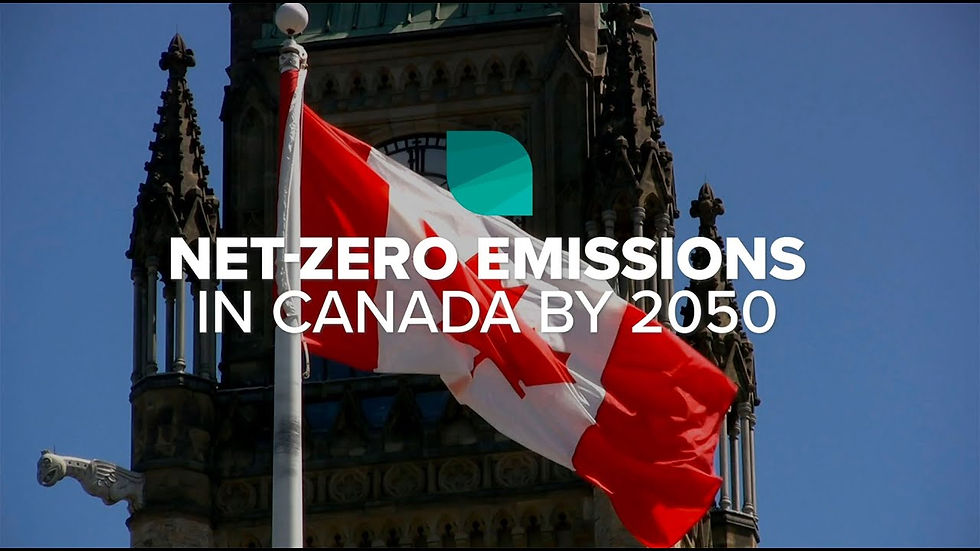
Under Carney’s leadership, we can expect an unambiguous recommitment to net-zero emissions by 2050—likely backed by:
Tighter interim targets for 2030 and 2035.
Enforceable emission caps on the oil and gas sector.
New national standards for building energy performance and retrofits.
Greater integration of nature-based solutions, such as forest conservation and wetland restoration, into emissions accounting.
Building a Fair and Just Energy Transition
The Carney government has signaled its commitment to climate justice and reconciliation, recognizing that the path to net-zero must be equitable. Policy design will likely:
Prioritize support for Indigenous-led renewable energy projects and territorial climate resilience.
Expand Just Transition programs to support workers and communities reliant on fossil fuel economies.
Ensure that low-income and rural Canadians are not left behind by carbon pricing or electrification programs.
Canada as a Green Finance Powerhouse

With Carney at the helm, Canada is poised to lead globally in climate finance. Expect:
Expansion of sustainable finance regulations and climate risk disclosure rules.
Green bond issuances to fund clean infrastructure and public transit.
New incentives to drive ESG alignment in Canada’s financial system, including pensions and institutional investors.
What’s Next?
While bold promises must still be matched with even bolder execution, early signs point to a government that understands the urgency and opportunity of climate leadership. A Carney-led Liberal Party can bridge the worlds of policy, markets, and environmental stewardship—making the case that climate action is not a burden, but a growth engine.

As Prime Minister, Mark Carney is expected to meet President Donald Trump head to head—with clarity, confidence, and economic credibility.
Unlike past Canadian leaders who were forced to navigate Trump’s unpredictability from a defensive stance, Carney brings a global reputation forged at the highest levels of finance and diplomacy. He speaks the language of markets and power, which gives him unique leverage in protecting Canada’s interests.
Whether it’s countering punitive tariffs, defending Canada’s clean energy exports, or pushing back against climate rollback rhetoric, Carney is poised to engage Trump directly—with facts, resolve, and a plan rooted in long-term prosperity.
Final Thoughts
Canada now has a Prime Minister who doesn’t just believe in climate action—he understands it at the deepest economic and systemic levels. Mark Carney is not a career politician stepping into environmental policy—he's a seasoned financial leader who has spent years at the intersection of economics and climate science, shaping the global conversation on sustainable finance and responsible growth. His work with the Bank of Canada, the Bank of England, and the United Nations has proven that climate stability and economic strength are not opposing forces—they are interdependent.

Carney recognizes that the climate emergency is not a distant threat—it’s a present and escalating crisis demanding immediate, strategic, and sustained action. His leadership reflects a rare blend of financial acumen, diplomatic experience, and moral clarity. He knows how to align capital with climate goals, how to de-risk green innovation, and how to design policies that work across industries and income levels. In short, he is the right leader at the right moment—capable of navigating geopolitical turbulence, revitalizing Canada’s economic base, and accelerating our path toward a net-zero, climate-resilient future.
Canada has made a bold choice. Now, with Mark Carney at the helm, we have the momentum—and the leadership—to turn that choice into lasting progress.
Let’s get to work!


Comments